Vulnerability Assessments Enough to Secure Web Applications
As organizations continue to rely on web applications to support business operations, customer engagement, and online transactions, cybersecurity has become more important than ever. Web applications handle sensitive information such as customer records, financial details, login credentials, and confidential business data, making them attractive targets for cybercriminals. To reduce security risks, many businesses conduct a web application vulnerability assessment to identify weaknesses before attackers can exploit them. While vulnerability assessments are an essential part of application security, many organizations wonder whether they are sufficient on their own to fully secure a web application. The answer is that they provide a strong foundation but should be combined with other security practices to achieve comprehensive protection.
A web application vulnerability assessment is a structured process designed to identify, analyze, and prioritize security weaknesses within a web application. Security professionals use automated scanning tools and manual verification techniques to detect vulnerabilities such as SQL injection, cross-site scripting, broken authentication, insecure configurations, outdated software components, and improper access controls. The primary goal is to provide organizations with a detailed understanding of existing security issues so they can remediate them before they are exploited by malicious actors.
One of the greatest advantages of a web application vulnerability assessment is its ability to identify a wide range of known vulnerabilities quickly and efficiently. Automated tools can scan large applications in a relatively short period, making it possible to detect common security flaws that may otherwise go unnoticed during software development. Manual validation further improves the accuracy of the findings by eliminating false positives and identifying certain issues that automated scanners may not detect. This combination helps organizations strengthen their security posture by addressing vulnerabilities before they become serious threats.
However, a web application vulnerability assessment primarily focuses on identifying vulnerabilities rather than determining whether those vulnerabilities can actually be exploited in a real-world attack. It highlights potential weaknesses but does not always demonstrate their practical impact. Some vulnerabilities may pose minimal risk because they cannot be exploited under normal circumstances, while others may become highly critical when combined with additional weaknesses. This limitation is one reason why organizations often supplement vulnerability assessments with penetration testing to gain a deeper understanding of actual security risks.
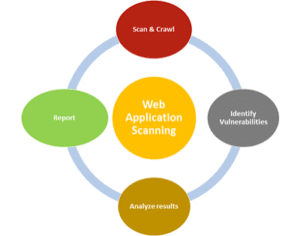
Modern cyberattacks rarely rely on a single vulnerability. Instead, attackers frequently chain together multiple weaknesses to bypass security controls, escalate privileges, or gain unauthorized access to sensitive information. Although a web application vulnerability assessment identifies individual security flaws, it may not reveal how attackers could combine them to compromise the application. Penetration testing addresses this gap by simulating realistic attack scenarios and demonstrating the practical consequences of identified vulnerabilities. Together, these two approaches provide a more complete evaluation of application security.
Are Vulnerability Assessments Enough to Secure Web Applications?
Another limitation of relying solely on a web application vulnerability assessment is that automated scanning tools cannot detect every type of security issue. Business logic flaws, workflow manipulation, authorization bypasses, and complex authentication weaknesses often require human expertise to identify. Experienced security professionals evaluate how users interact with the application and analyze business processes to uncover vulnerabilities that automated scanners cannot recognize. Without these manual assessments, organizations may overlook security issues that pose significant business risks.
Despite these limitations, a web application vulnerability assessment remains an essential component of every cybersecurity program because it enables organizations to identify known vulnerabilities before attackers discover them. Detecting issues such as insecure configurations, outdated software libraries, weak encryption, exposed administrative interfaces, and missing security controls allows businesses to reduce their attack surface significantly. Regular assessments also help ensure that newly introduced vulnerabilities resulting from software updates or infrastructure changes are detected promptly.
Cybersecurity is a continuous process because web applications constantly evolve through feature enhancements, software upgrades, third-party integrations, and infrastructure modifications. Every change has the potential to introduce new vulnerabilities. Conducting a web application vulnerability assessment on a regular basis allows organizations to identify these newly introduced risks before they become exploitable. Continuous assessment also supports proactive security management by ensuring that security remains an integral part of the software development lifecycle rather than an afterthought.
Another important reason organizations should perform a web application vulnerability assessment is to support regulatory compliance. Many security standards and industry regulations, including PCI DSS, ISO 27001, HIPAA, GDPR, and SOC 2, require regular security assessments to protect sensitive information and demonstrate responsible cybersecurity practices. Routine vulnerability assessments provide documented evidence that organizations actively monitor and manage security risks while helping reduce the likelihood of regulatory penalties resulting from preventable security incidents.
The findings from a web application vulnerability assessment also provide valuable guidance for development teams. Assessment reports typically include descriptions of identified vulnerabilities, severity ratings, affected components, potential business impact, and recommended remediation strategies. Developers can use this information to improve secure coding practices, strengthen software quality assurance, and reduce the likelihood of introducing similar vulnerabilities into future releases. Over time, this continuous feedback contributes to a stronger security culture and more resilient web applications.
Although a web application vulnerability assessment is highly effective at identifying security weaknesses, organizations should recognize that no single security measure is sufficient on its own. Comprehensive application security requires multiple layers of protection, including secure software development practices, regular software updates, penetration testing, security monitoring, employee awareness training, access control management, encryption, web application firewalls, and incident response planning. Each of these measures addresses different aspects of cybersecurity, creating a stronger overall defense against evolving threats.
Ultimately, web application vulnerability assessment is an indispensable part of securing modern web applications, but it should not be viewed as a complete security solution by itself. It provides organizations with valuable insights into known vulnerabilities, helps prioritize remediation efforts, supports regulatory compliance, and improves secure development practices. However, combining vulnerability assessments with penetration testing, continuous monitoring, secure coding standards, and proactive cybersecurity strategies delivers far greater protection against today’s sophisticated cyber threats. By treating web application vulnerability assessment as one component of a comprehensive security program, organizations can significantly reduce risk, protect sensitive information, strengthen customer trust, and maintain resilient web applications in an increasingly complex digital environment.